There’s a lot to think about when it comes to holiday meals whether you are hosting the meal or simply bringing a dish. If you’re planning to prepare a turkey for the holidays, be sure to make food safety a priority in your game plan. Raw turkey can be a source of pathogens that can make you and your loved ones sick such as salmonella and campylobacter. By taking proper steps to store, thaw, and prepare your turkey, you can prevent foodborne illness.
Simple Tips For Preparing Turkey Safely
(Updated: Dec. 6, 2024, 4:39 a.m.)
- How should I store my turkey?
- Keep your frozen turkey in the freezer until you are ready to thaw and prepare it. You’ll want to make sure your freezer is running at the correct temperature of 0°F or below. Take care to avoid letting your turkey sit in the temperature danger zone (41°F-135°F).
- How long does it take to thaw a turkey?
- Refrigerator Thawing: The USDA recommends consumers to allow 24 hours for every 4-5 pounds of turkey when thawing in the refrigerator.
- Cold Water Thawing: If you plan to cook your turkey right away, you can allow your turkey to thaw in cold water by allowing 30 minutes per pound of turkey. In this method, turkeys should be kept in a leakproof plastic bag completely covered in cold water that is changed every 30 minutes until thawed.
- Can I thaw my turkey on the counter?
- Do not thaw turkey at room temperature by letting it sit on the counter. Pathogens grow quickly in the temperature danger zone of 41°F-135°F. Even if your turkey is still frozen at the center, parts of the turkey are sitting in this dangerous range of temperatures that allow bacteria to grow. Turkeys that sit at room temperature for 2 hours or more have an unsafe temperature.
- Should I wash my turkey before preparing it?
- Do not wash or rinse your turkey before preparing it. Remember that poultry can contain pathogens like salmonella, campylobacter, and clostridium perfringens. Washing poultry increases the risk that risky bacteria and pathogens may splatter and spread across the kitchen onto utensils, countertops, and other surfaces. Cooking poultry to the proper internal temperature is the proper method to kill risky bacteria.
- How do I know when my turkey is done cooking?
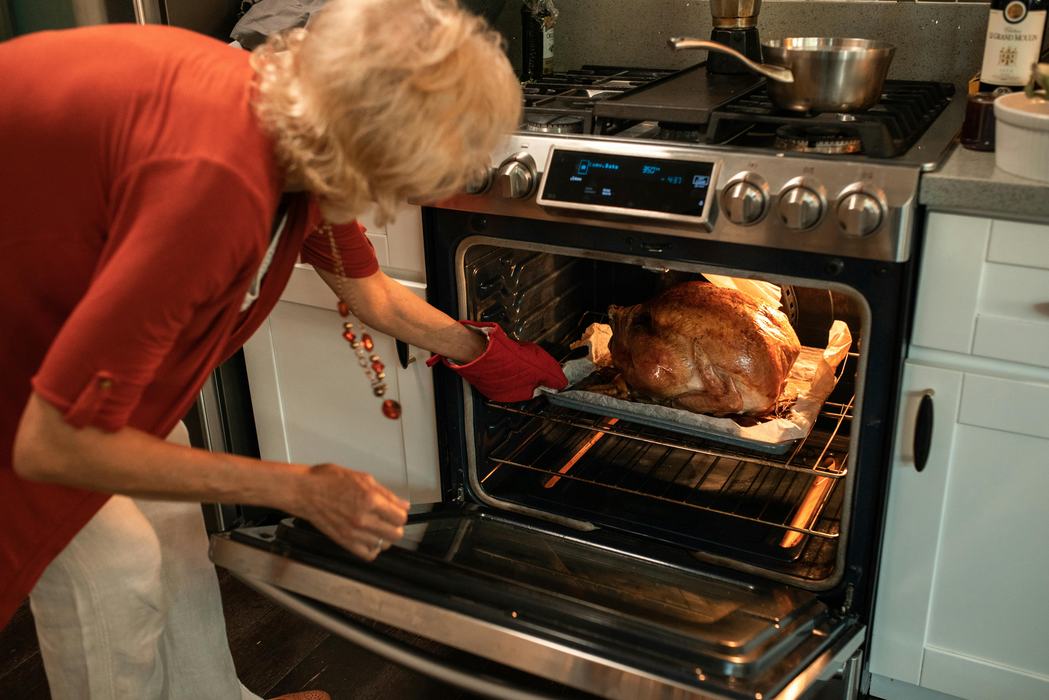
- Pop up thermometers and the outer appearance of a turkey is not enough to know that the turkey has reached the proper internal temperature needed to kill pathogens. The best way is to use a food thermometer to check the internal temperature has reached 165°F at the thickest part of the breast, thigh, and wing. Stuffing should also be cooked to 165°F even if prepared in a casserole dish.
- How do I handle holiday leftovers?
- Turkey may need to be cut into smaller pieces and casseroles may need to be portioned into shallow containers in order to help it cool more quickly. In order to prevent foodborne illness, promptly cool and refrigerate leftovers within 2 hours of serving. If foods were exposed to temperatures above 90°F such as a hot car or outdoor meal, they will need to be refrigerated within 1 hour according to the USDA guidelines. Refrigerators should be kept at 40°F or cooler to prevent foodborne illness. Leftovers also need to be cooked to a proper internal temperature in order to prevent foodborne illness! Be sure to reheat leftovers to 165°F by checking with a food thermometer before serving.
- See this video from Homegrown for more tips on handling holiday leftovers.
Turkey Resources:
- USDA Meat & Poultry Hotline: 1-888-674-6854 Mon-Fri from 10am to 6pm Eastern Time
- Turkey Basics: Safe Thawing
- Turkey: Safe Cooking Tips
- Various Turkey Cooking Methods
- Keep Risky Habits Out of the Kitchen This Thanksgiving
- Thanksgiving Turkey Food Safety from Safe Plates
Want to learn more about what's going on in FCS? Follow us online.
Join our mailing list!
Enter your email address to receive updates.
Written By