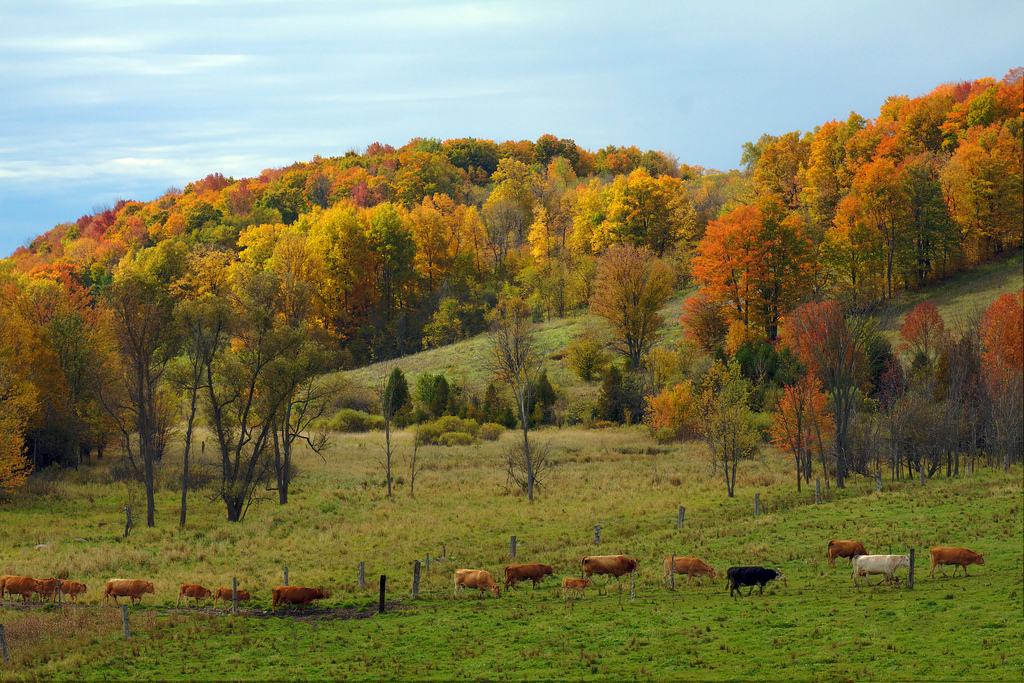
As we get into fall, now is a great time to start planning for fall and winter grazing and or hay supplementation. It is also a great time to make fertilizer applications to tall fescue pastures to help optimize forage production for this fall.
By this point in the year, you should have an overall idea of how much forage you have left to go into fall and know which pastures need to rest and regrow to better your chances of not running out of forage. Hopefully we continue to get rain throughout the fall to promote more fescue growth. This will also give you a ball park of how much hay you might need to plan for. Keeping records of how much hay you fed last winter will help you estimate how much hay you may need. It is better to be prepared and have your hay on standby than it is to be trying to find hay last minute before when you runout of grass or a winter storm. Be mindful that with the drought this summer, hay yields were down ranging from 20-60%. So, hay could still be in a shortage. Even if you do not have barn or shed space for hay to be stored out of the elements, here are a few suggestions to keep in mind that will help preserve the nutrients in the hay.
Hay loses more nutrients from sitting directly on the ground, than it does from being uncovered. So, if all possible keep hay stored off of the ground. Pallets and old tires are a great cheap resource to use to get hay off of the ground. If you can, cover the hay up with a tarp to keep rain and sun from ruining the bales. By protecting hay from the elements, it helps preserve it nutrients. Hay that has been left outside in the elements can be rotten or molded many inches towards the center of the bale. The outer part of these bales contains much less nutrients than what the hay originally had at harvesting. Feeding hay that has been stored correctly will reduce the amount of hay that needs to be fed compared to bales that have gotten wet and moldy.
A way to make sure you have extra grass to graze during the winter and cut down on hay feeding is to stockpile fescue pastures. Stockpiling is basically keeping livestock off a certain area or pasture and allowing the forage to grow until livestock is turned back into that pasture. Tall fescue is a cool season perennial forage that almost goes dormant in the summer and will start growing as cooler weather begins in late summer early fall. It is important to apply nitrogen (50 lbs/acre) to pastures starting around mid-August through late September. The nitrogen will boost the growth of the grass as it starts to grow again. To get started stockpiling fescue, you can either graze or mow the areas you want to stockpile before you apply nitrogen or fertilizer. In order to make sure that you optimize forage production, do not start grazing the stockpiled fescue until December or January, when the fescue has stopped or slowed down its growth for the winter. Not only will this extend your grazing season, but these areas of stockpiled fescue will help keep the mud down during the winter since there will be more forage matter covering the ground. Hay can also be rationed out while livestock is grazing these areas, to extend the grazing time on each section that is stockpiled.
When feeding hay this fall and winter, a good practice is to place hay in areas where soil or forage is poor. The hay wasted as well as the concentrated manure and urine from feeding areas, can add more nutrients in the soil.
Hay can be a huge cost to livestock operations and cost more dollars than grazing fresh forage.
For more information, contact Adam Lawing by email or 336.318.6012.