Integrated Pest Management (IPM) is a term used widely in agriculture, however its actual meaning is, in large part, misunderstood. North Carolina State University's definition is “socially acceptable, environmentally responsible, and economically practical crop protection.” IPM takes into consideration all the tools a producer has at their disposal for pest management and then looks at the effect it will have in the short and long term.
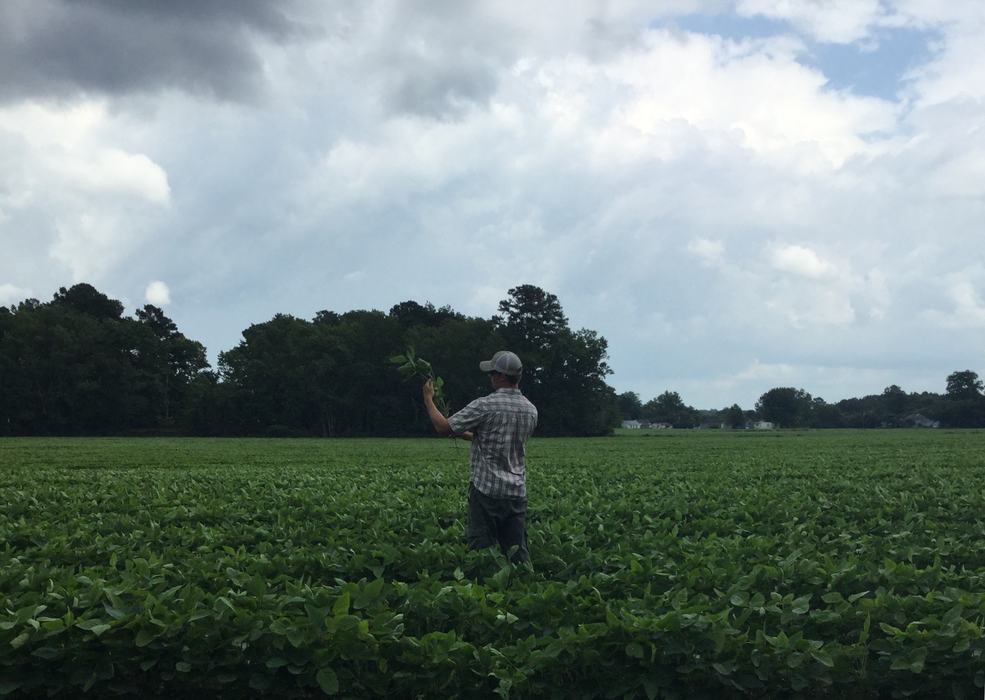
Every management practice comes with a list of potentially negative outcomes that must be considered. What risk does a pesticide choice present to the environment and other organisms? Will controlling this pest cause a secondary pest to emerge? Will it drive resistance? Will soil health be impacted? These are examples of the ripple effects that come from making a management decision. The crop must be monitored in order to make the most informed decision. One of the most important monitoring techniques is scouting. Scouting identifies the type of pests, the quantity of pests, and the overall health of the crop. This allows economic thresholds to be used for financially justifying a control method.
Contrary to some belief, IPM doesn’t remove pesticides from the toolbox altogether, rather, the aim is to utilize other options to prevent the pest from becoming a problem in the first place. Cultural, physical, and biological controls are examples of non-pesticide practices that decrease pest issues. Cultural control includes planting/harvest dates, crop rotation, sanitation, plant resistance and more. Changing a cultural practice can simply be altering a management decision, while other times it requires a financial investment, such as buying new equipment. Physical control can include tillage, mulching, mowing and more. Biological control focuses on letting beneficial insects do the pest control for you as much as possible. This may include releasing beneficial insects or just trying to preserve the populations that are already there.
Every management decision has a consequence, good or bad, and every farming operation is run differently, therefore, IPM is full of gray area. There are different understandings and definitions of IPM floating around, but, to some degree, most farms are incorporating at least some of these ideas into their operations already. As you probably guessed, there is no entirely right way to practice IPM. Through science-based research we try to offer a logical path for decision making. As we learn more and as pests change, IPM will change as well, making it a powerful tool for farmers to utilize.