The Search Engine
Google’s search engine uses a three-step process to provide the most relevant and accurate responses to a search query. First, it uses natural language processing to break down your query and understand your meaning. Second, it uses a crawler to trawl the web and collect information on many websites. It stores that information in a giant online index, which is kind of like a digital filing cabinet for web pages. Finally, it uses an algorithm to pull relevant results that match your query and list them in order of most relevant to least relevant for you to peruse.
The Query
A query is what you type into the search box. You can Google almost anything, from how to cook crawfish to what hairstyle a popular actress wore during an awards ceremony.
Most of the time, your query will likely match other questions people have searched on Google previously. In this case, you will see a drop-down menu appear below the search box with autocomplete suggestions of possible queries you may want to select that have some similarity to yours.
When your query is entirely original, Google uses its language processing system to understand what you mean. Natural Language Processing, or NLP, is an AI system that allows computing devices to understand and generate both text and speech. IBM explains more about Natural Language Processing if you want to read more.
Human language is often vague and layered. Sometimes you may know exactly what you want to ask, like “What is the name of the fish with orange strips?” Other times, you may not recall exactly what you wanted and may find yourself Googling around the subject, with queries like “animal in water orange and white.” In this case, Google's Natural Language Processing system will interpret what you mean.
This also means that Google can correctly interpret many spelling mistakes, which is good news if you struggle to remember if the word “refrigerator” has the letter d somewhere in the middle of the word!The Crawler and the Index
Google uses a crawler called the Googlebot to keep tabs on online content. Other popular search engines use similar tools. So, what does the Googlebot do?
The Googlebot scans websites by progressing from one link to another and checking for keyword-based content. Suppose a popular sports website adds a new page about baseball, linked to its homepage about sports. The Googlebot will see the link on the original sport-related homepage, and check out the new page via the link.
Many websites use something called a sitemap that lists the URLs of all their pages to make sure the Googlebot can easily find each one.
Information like the URL, keywords, locations, and the quality of a website gets stored in Google’s index. This is like a digital file folder keeping information about all the websites the crawler has explored.The Algorithm and Ranked Search Results
Google does not dump all the results of its index on you higgledy-piggledy when you type in a query. Instead, it carefully ranks the websites it determines will best answer your question or fit your needs and places the most useful results at the top of the page of search results.
To do this, the Google search engine uses a powerful algorithm. An algorithm is basically a list of instructions designed to accomplish a set task. In this case, Google’s algorithm pulls possible websites from its index and ranks them based on many factors, including which websites best match the keywords you used in your query, the physical location of a business listed on a website, and the quality and organization of the website. The algorithm also considers two important elements of website quality: whether or not the website is mobile-friendly, and how quickly the website loads.
Another factor that can impact the ranking of a website in a Google search is the quality of images on the website because a Google search does not just consider text–it also searches images and videos. Factors like freshness of content, as opposed to older and outdated content, also play a role in ranking.
Your geographic location can also impact how the Google algorithm ranks results. If you search for “best pancakes” while in Florida, you will get a list of diners and restaurants located in Florida. But if you type in the same query while you are in Maine, you will see a completely different list of restaurants.The Elements of a Google Search
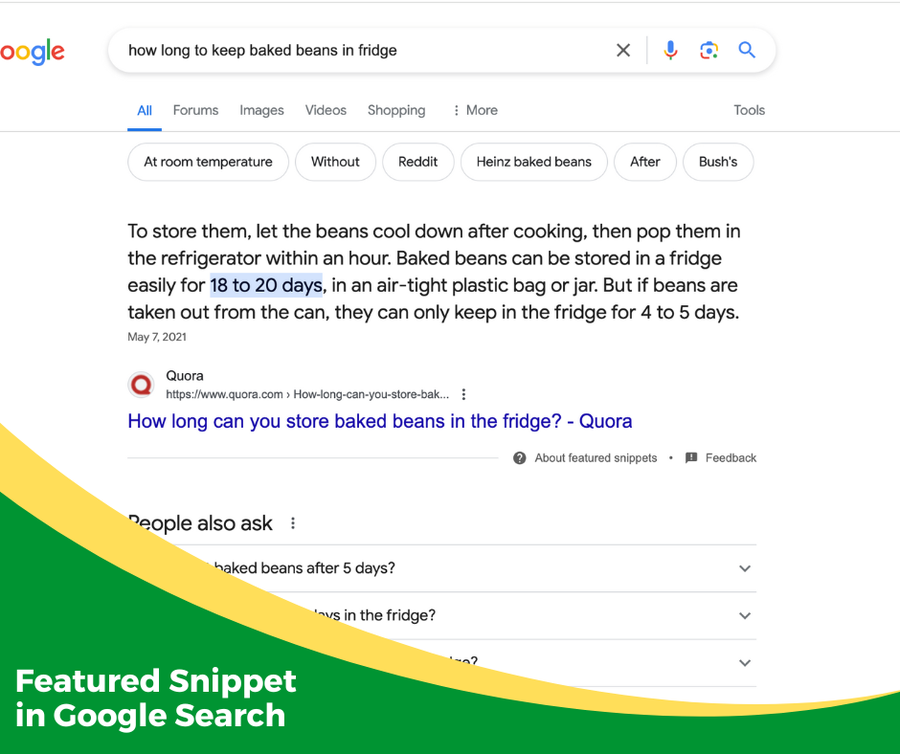
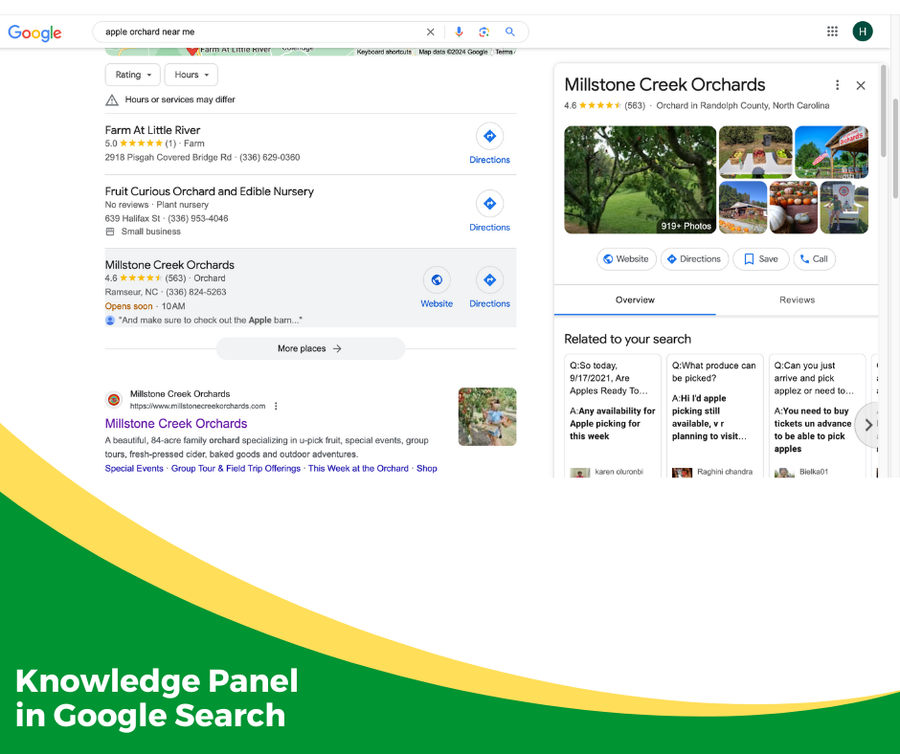
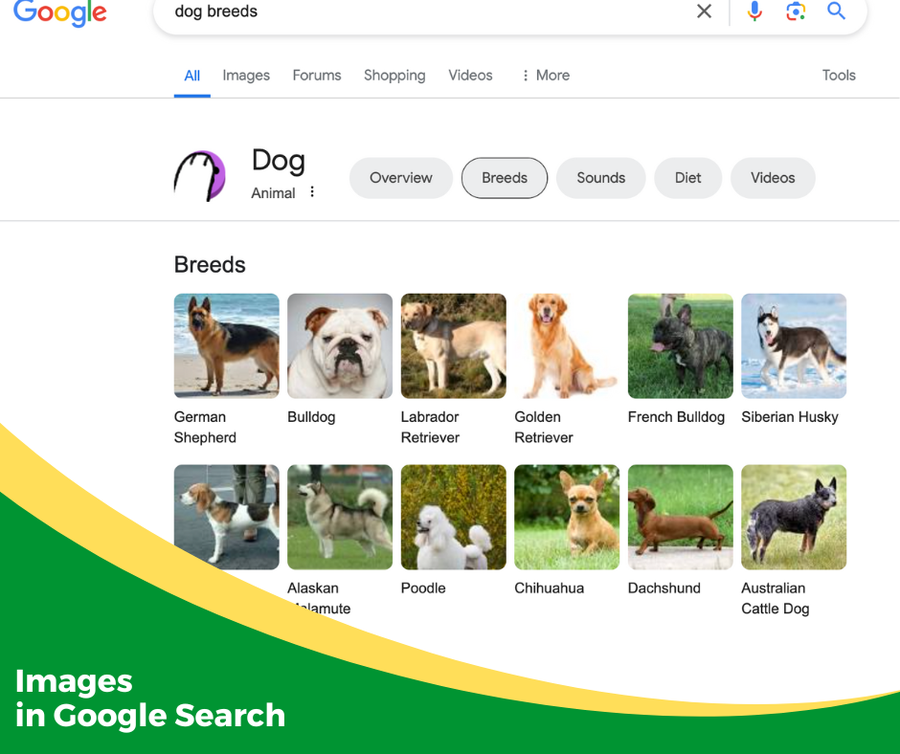
The layout of a search result page may look different depending on the kind of query you use. Understanding the elements of common Google search result layouts can help you quickly navigate to the answer you want. It is worth noting that these elements do change over time. You can read more about how Google chooses to lay out search results here.