Last year (2024), Fall Armyworms created a huge impact on hayfields and pastures across Randolph County, as well as many other counties in North Carolina. As many producers and growers experienced the armyworms' fast and destructive “march” across forages, that should be a reminder to pay attention and start scouting now until fall.
This pest is the biggest caterpillar pest that can harm pastures and hayfields. These pests feed on various types of forages and crops, feeding on the leaves of plants and leaving the stems behind. Depending on the number and concentration of armyworms, damage can be high in a short time.
One relief to note is that they do not overwinter in our climate. Frost and cold weather will kill out any of the pupa in the ground from the last generation. They do, however, get brought in by storms from the south. The life cycle of the fall armyworm is around 30 days. The sooner they arrive by storms, the more potential there is for multiple generations.
Last year, I noticed that most of the damages in forages were in hay fields where the forage was growing back and recovering from the previous cutting, pastures/fields that had forages becoming established, and pastures that were recently grazed and or overgrazed and resting/regrowing. Most of the taller, more mature fescue pastures were not touched. With that being said, the armyworms do prefer the younger, more tender grass. Those would be the areas that I would diligently keep an eye on.
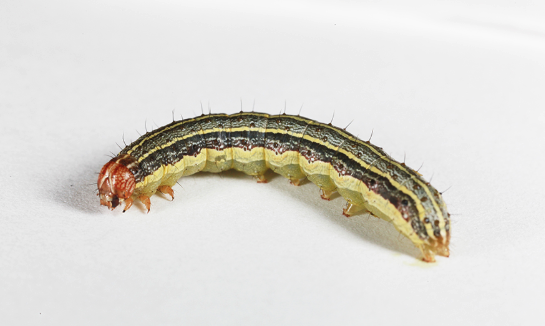
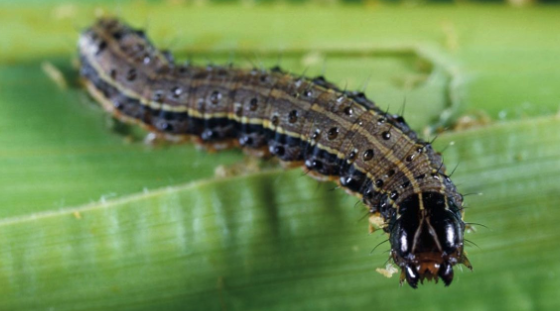
Armyworms can grow to around 1.5 inches in the larva stage. Their colors can vary from light green to dark brown or black. All of them will have stripes down their bodies.
Being able to identify them early is a huge benefit when scouting fields. The larva feeds for around 14 days. The last 4 days of this cycle are when most of the damage occurs. Finding them early can help save your forages. The best times to scout pastures and hayfields are early morning and late afternoon when they are feeding. Birds can be an indicator of an infestation. The threshold for treatment is 3 caterpillars that are longer than ¼ inch per square foot on average.
Treatment of Fall Armyworms can be spraying insecticides or harvesting the forage that is being infested. Most insecticides are more effective when the larvae are smaller (¾ inches or less). For larger larva infestations, haying may be the best option. Again, since they can destroy forages very quickly, haying or spraying must be done immediately.
Heavily destroyed forages may need to be renovated, overseeded, or fertilized and let rest to help promote forage regrowth. Products labeled for use in forages and pastures can be found here. Products in that link that have RUP in the precaution section are Restricted Use Pesticides and require a pesticide license to be able to be purchased. It is important to remember to always read the label on any pesticide product and follow the warnings and directions. Some of these products do have grazing and harvesting restrictions.