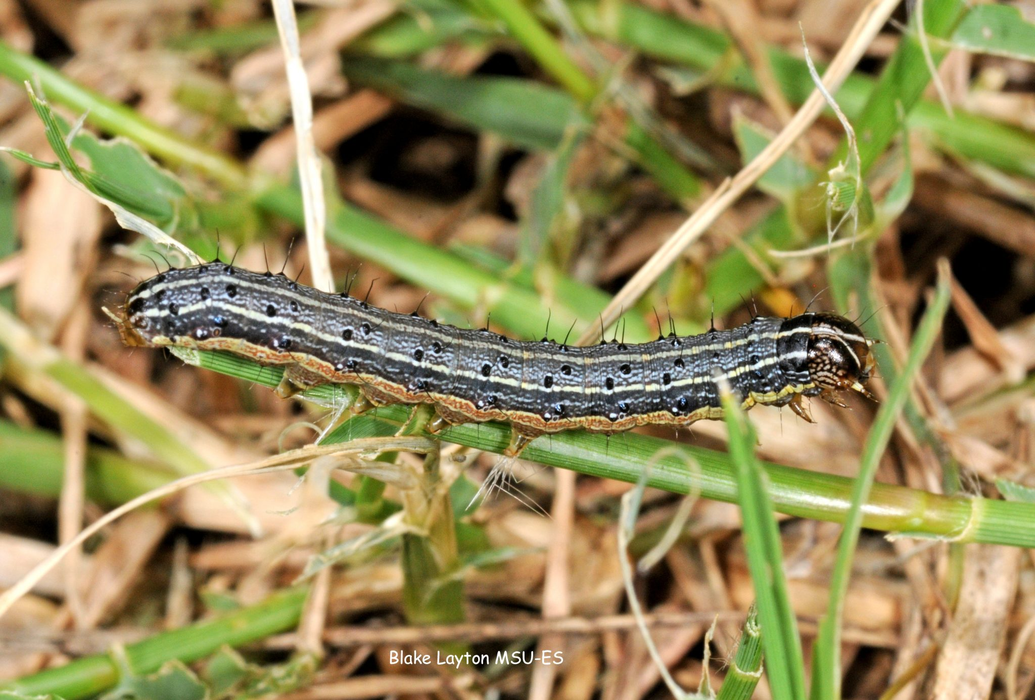
I have received reports from inside Randolph County and Moore County of forages being damaged by Fall Armyworms this week. This pest is the biggest caterpillar pest that can harm pastures and hayfields. These pests feed on various types of forages and crops, feeding on the leaves of plants and leaving the stems behind. Depending on the amount and concentration of the armyworms, damage can be high in a short period of time.
Armyworms can grow to around 1.5 inches in the larva stage. Their colors can vary from light green to dark brown or black. All of them will have stripes down their bodies.
Being able to identify them early is a huge benefit when scouting fields. The larva feeds for around 14 days. The last 4 days of this cycle is when most of the damage occurs. Finding them early can help save your forages. The best times to scout pastures and hay fields are early morning and late afternoon when they are feeding. Birds can be an indicator of an infestation. The threshold for treatment is 3 caterpillars that are longer than ¼ inch per square foot on average.
Treatment of Fall Armyworms can be spraying insecticides or harvesting the forage that is being infested. Most insecticides are more effective when the larvae are smaller (¾ inches or less). For larger larvae infestations, haying may be the best option. Again, since they can destroy forages very quickly, haying or spraying must be done immediately.
Heavily destroyed forages may need to be renovated, overseeded, or fertilized and let rest to help promote forage regrowth. Products labeled for use in forages and pastures can be found here. Products in that link that have RUP in the precaution section are Restricted Use Pesticides and require a pesticide license to be able to be purchased. Remember to always read the label on any pesticide product and follow the warnings and directions. Some of these products do have grazing and harvesting restrictions.