Logo for N.C. Cooperative Extension N.C. Cooperative Extension Homepage

Featured Flora: February 2026

en Español / em Português
Español

El inglés es el idioma de control de esta página. En la medida en que haya algún conflicto entre la traducción al inglés y la traducción, el inglés prevalece.

Al hacer clic en el enlace de traducción se activa un servicio de traducción gratuito para convertir la página al español. Al igual que con cualquier traducción por Internet, la conversión no es sensible al contexto y puede que no traduzca el texto en su significado original. NC State Extension no garantiza la exactitud del texto traducido. Por favor, tenga en cuenta que algunas aplicaciones y/o servicios pueden no funcionar como se espera cuando se traducen.


Português

Inglês é o idioma de controle desta página. Na medida que haja algum conflito entre o texto original em Inglês e a tradução, o Inglês prevalece.

Ao clicar no link de tradução, um serviço gratuito de tradução será ativado para converter a página para o Português. Como em qualquer tradução pela internet, a conversão não é sensivel ao contexto e pode não ocorrer a tradução para o significado orginal. O serviço de Extensão da Carolina do Norte (NC State Extension) não garante a exatidão do texto traduzido. Por favor, observe que algumas funções ou serviços podem não funcionar como esperado após a tradução.


English

English is the controlling language of this page. To the extent there is any conflict between the English text and the translation, English controls.

Clicking on the translation link activates a free translation service to convert the page to Spanish. As with any Internet translation, the conversion is not context-sensitive and may not translate the text to its original meaning. NC State Extension does not guarantee the accuracy of the translated text. Please note that some applications and/or services may not function as expected when translated.

Collapse ▲

February 2026: Witch Hazel (Hamamelis virginiana)

Witch hazel is a deciduous shrub or small tree native to eastern North America, including North Carolina. It naturally grows along woodland edges and stream banks and is well known for its ability to flower while fruit from the previous season is still on the plant. This unusual trait adds to its seasonal interest and appeal.

Witch hazel grows best in full sun to partial shade, with the heaviest flowering occurring in sunnier locations. It prefers moist, acidic, organic-rich soil that drains well. While it does not tolerate drought, it adapts to heavy clay soils, erosion, and deer browsing. Pruning is rarely needed, but if shaping is desired, prune in early spring. Keep in mind that flowers form on older wood.

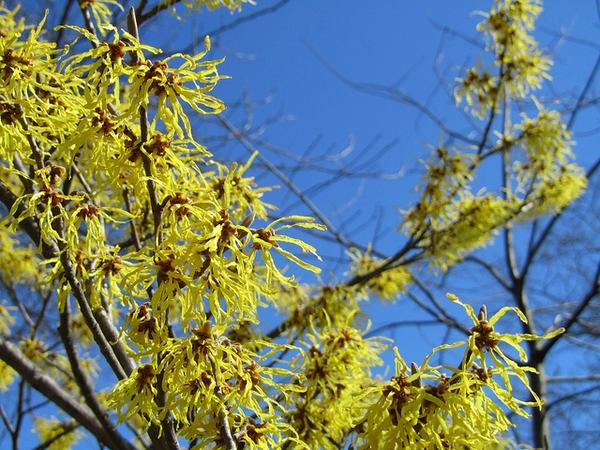
This plant provides interest throughout the year. Leaves emerge green in spring, turn a rich yellow in fall, and are followed by bright yellow, ribbon-like flowers that bloom from late fall through winter. These fragrant flowers bring welcome color to the winter landscape. Witch hazel also supports wildlife and contributes to a healthy garden ecosystem.

In the landscape, witch hazel fits well in woodland gardens, native and pollinator plantings, or along wooded borders. Its dense growth makes it useful as a tall hedge or seasonal privacy screen. It also works well as a specimen near patios, paths, or entryways, where its winter blooms can be enjoyed up close.

Uses

Witch hazel has a long history of use as a medicinal plant. Extracts made from the bark and leaves are known for their astringent and anti-inflammatory properties. Traditionally, witch hazel has been used to soothe skin irritations, reduce swelling, calm minor cuts and bruises, and relieve discomfort from insect bites. Today, it is commonly found in skin-care products, toners, and first-aid preparations due to its gentle yet effective properties.

Quick ID Hints

  • Yellow, strap-like flowers in axillary clusters

  • Deciduous shrub or small tree with zig-zag twigs

  • Leaf buds and young twigs are densely hairy
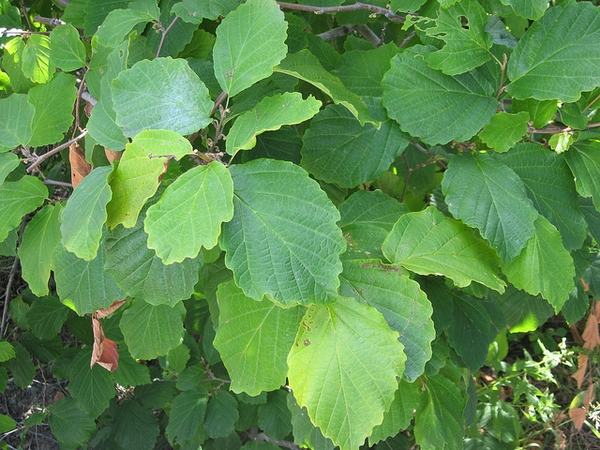
Broad green leaves on a short shrub.

Hamamelis virginiana
H. C. Wiliams
C.C. BY 2.0

Woody branches with flowers that have long thin yellow petals.

Hamamelis virginiana
Kurt Wagner
CC BY-NC-ND 2.0